High-Throughput, Fully Automated Cell-Free DNA Extraction from up to 10 mL Serum Samples
Chris Lee¹, Jonatan Lysen¹, Jeff Roeder¹, Kiranmai Durvasula¹, and Travis Butts¹
Omega Bio-tek, Inc, Norcross, GA 30071
Overview
Purpose:
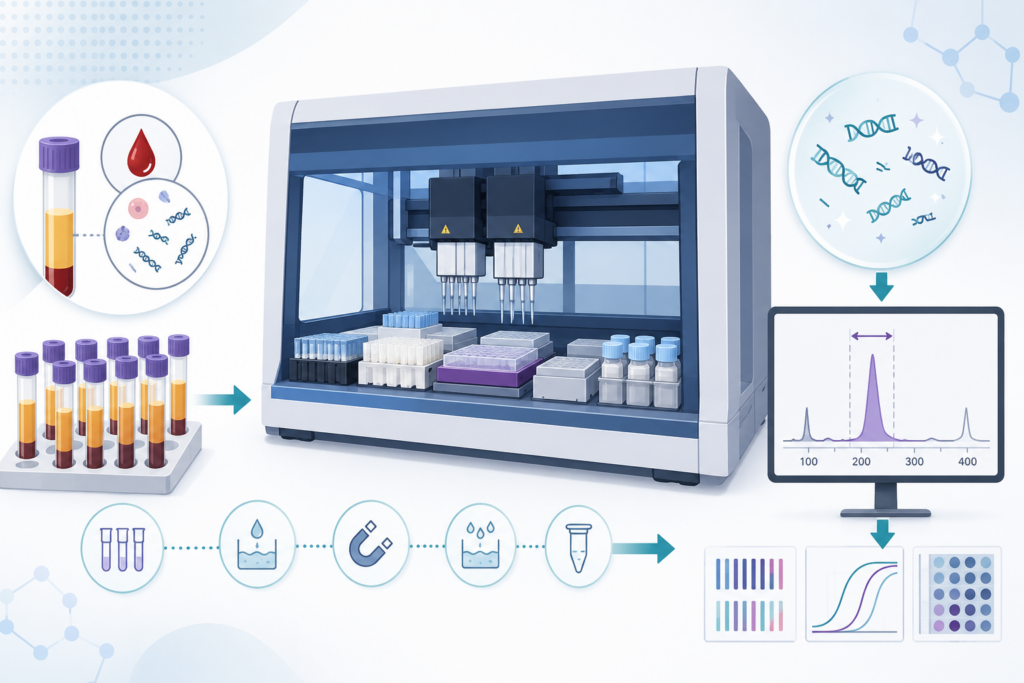
Development of a fully automated solution to extract cfDNA from up to 10 mL samples in 2.75 hours when integrated on Hamilton’s Microlab® STAR™ platform.
Methods:
cfDNA extracted using automated protocol with Mag-Bind® cfDNA Kit on a Hamilton Microlab® STAR™
Yield and Quality analysis using Agilent’s TapeStation® 2200
Results:
Efficient cfDNA purification achieved with automated protocol
Automated protocol doubles cfDNA yield from manual protocol
Average peak size was comparable between automated and manual protocols
Introduction
The use of circulating, cell-free DNA (cfDNA) is rapidly evolving in the clinical landscape and is one of the fastest growing areas in recent years. It offers tremendous clinical potential as a screening method for tumor, cancer, fetal DNA studies, disease progression, treatment response, and more. Circulating DNA extraction is often challenging as they are found in low quantities, and accurate methods are needed to isolate the less abundant cfDNA with higher sensitivity and specificity. Rapid, reliable, and high throughput methodologies are needed for widespread adoption and implementation of cfDNA-based diagnostics in clinical care. Omega Bio-tek has developed a fully automated solution to extract cfDNA from up to 10 mL samples in 2.75 hours when integrated on Hamilton’s Microlab® STAR™ platform. The system is scalable and can extract samplevolumes ranging from 1-10 mL without any hardware modification or additional accessories on the Hamilton workstation.
Methods
cfDNA Extraction and Analysis
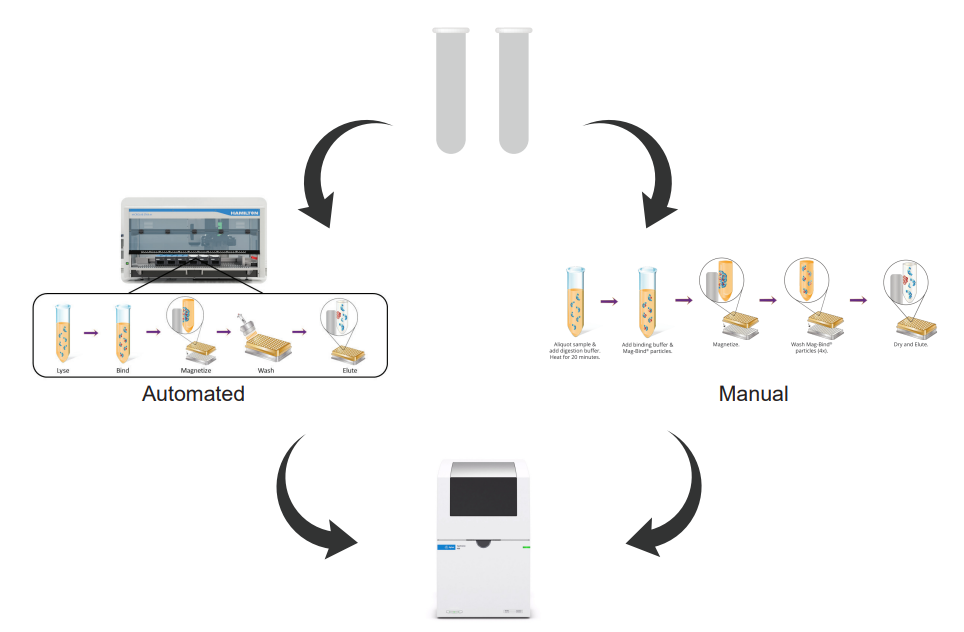
To evaluate the overall performance of the Mag-Bind® cfDNA Kit, 10 mL of unspiked serum sample was used to isolate cfDNA using Omega Bio-tek’s Mag-Bind® cfDNA Kit automated on a Hamilton Microlab® STAR™. Next, to compare automated versus manual extraction protocols, cfDNA was extracted from 8 mL of sample using Omega Bio-tek’s automated protocol and from 4 mL of sample using the manual extraction protocol. The automated extraction protocol follows the workflow presented in Figure 1. For the manual extraction, 4 mL of serum sample was used to extract cfDNA following manufacturer’s protocols. Agilent’s TapeStation® 2200 was used to evaluate the performance of each extraction protocol.
Mag-Bind® cfDNA Kit Extraction Workflow from 10 mL Input Automated on Hamilton Microlab® STAR™
Figure 1. cfDNA was isolated from 10 mL of unspiked serum using Omega Bio-tek's MAg-Bind® cfDNA Kit automated on a Hamilton Microlab® STAR™
Results
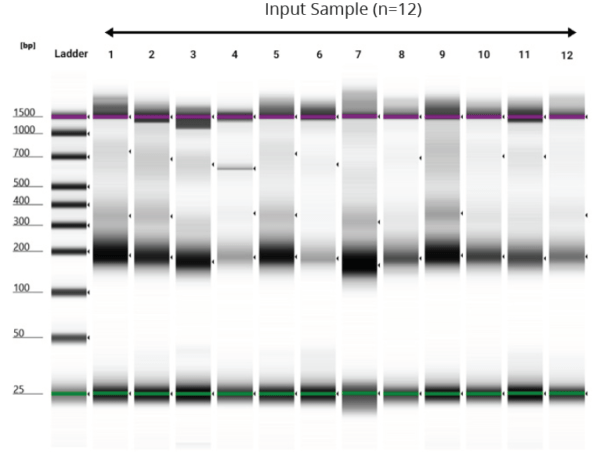
TapeStation® Analysis of Purfied cfDNA from 10 mL Serum Samples
Figure 2. Gel image generated from TapeStation® of cfDNA purified from 10 mL of unspiked serum samples (n = 12) using Omega Bio-tek’s Kit automated on Hamilton Microlab® STAR™ platform. Efficient purification of cfDNA was indicated by the characteristic peak at approximately 170 bp.
Comparison of Yield Values from Manual vs Automated Extraction
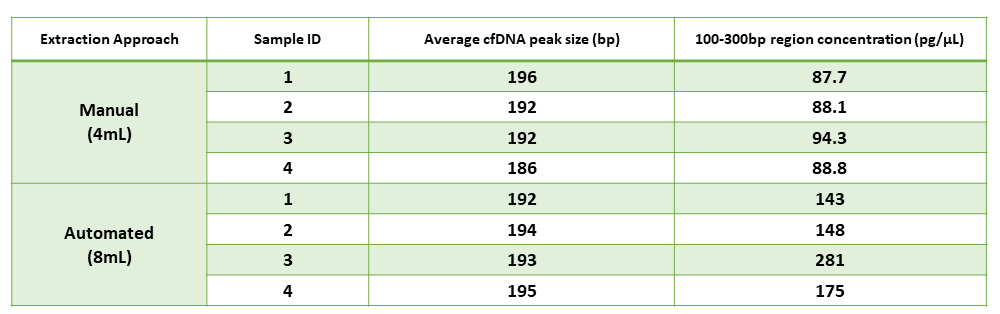
Table 1. Regional analysis using TapeStation® software showed that cfDNA yield roughly doubled when doubling the sample volume from 4 mL in the manual extraction protocol to 8 mL in the automated protocol. The average cfDNA peak size was comparable between manual and automated extraction, showing ~192 bp versus ~194 bp, respectively.
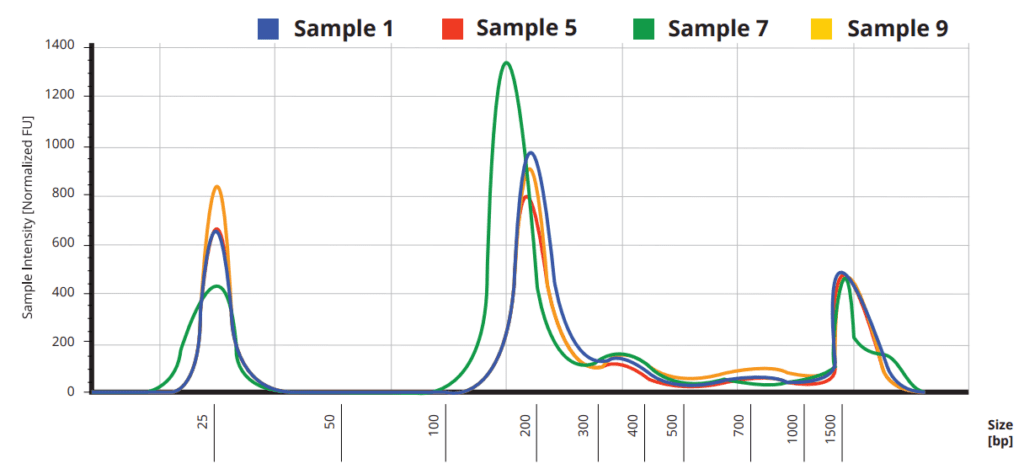
TapeStation® Analysis of Purified cfDNA from Manual vs Automated Extraction
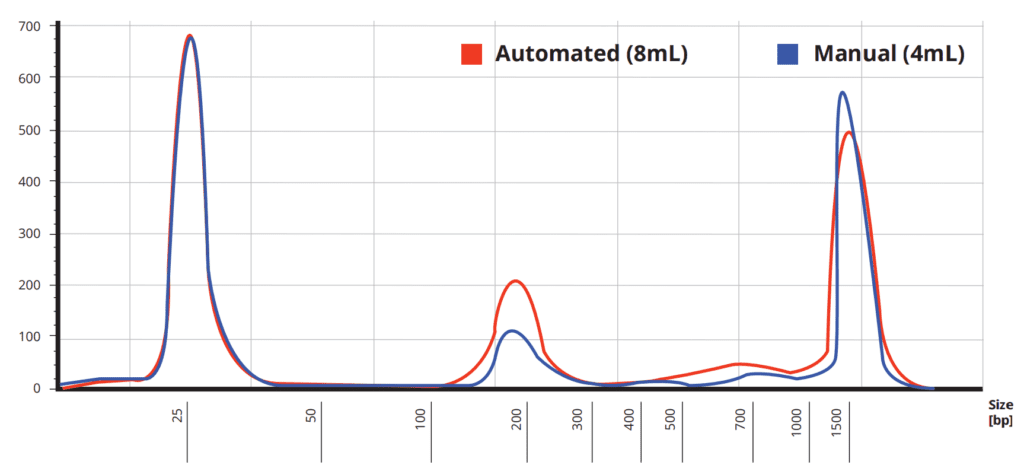
Figure 3. The overlay showed that the purified DNA contained more cfDNA and minimal genomic DNA contamination. Again, the average size of the cfDNA peaks was similar between the manual and automated protocols, with the automated protocol showing a higher intensity around the average peak of 194 bp.
Conclusions
From the findings presented, Omega Bio-tek’s high throughput workflow automated on the Hamilton Microlab® STAR™ platform:
allows flexible sample inputs and low elution volumes
produces high-quality cfDNA for use in various downstream applications
addresses the need for a rapid, reliable, and high throughput method for extracting cfDNA
$0.00–$2,675.20Price range: $0.00 through $2,675.20Select options
This product has multiple variants. The options may be chosen on the product page
Interested in Automating your Nucleic Acid Extraction Workflows? Tell us about your project!
Shopping Cart
Scroll to Top
We use cookies to ensure that we give you the best experience on our website. If you continue to use this site we will assume that you are happy with it.